Starting a roleplay community looks deceptively simple from the outside. You rent a machine, install a framework, add some content, open the doors. Thousands of people try it every year. Most of those servers are gone within three months, and the reasons are remarkably consistent.
What follows is the short version of lessons that usually get learned the expensive way.
Mistake one: buying content before deciding what the city is
The first instinct is always to start collecting. Cars, interiors, scripts, clothing, anything that looks impressive in a preview video. Two weeks later the server is a museum of unrelated objects: a fantasy supercar parked outside a run-down diner, a luxury penthouse above a tyre shop, three different architectural styles on the same street.
Players notice this immediately, even if they cannot articulate it. The city feels like a catalogue rather than a place.
Owners who last do the opposite. They decide what kind of world they are building first: a working-class industrial city, a sun-bleached coastal town, a server built around emergency services. Once that is settled, every purchase becomes a simple test. Does this belong here? Most things do not, and saying no is what creates coherence.
Mistake two: treating performance as an afterthought
Every model, texture and script has a cost, and those costs are invisible until a crowd gathers. A server can look flawless while you are testing alone at three in the morning and fall apart the moment forty players show up for an event.
High-resolution textures are the usual culprit. A single vehicle with uncompressed textures can weigh more than ten properly optimised ones. Multiply that across a few hundred assets and the server becomes unplayable for anyone without a high-end machine, which quietly filters out a large portion of your potential community.
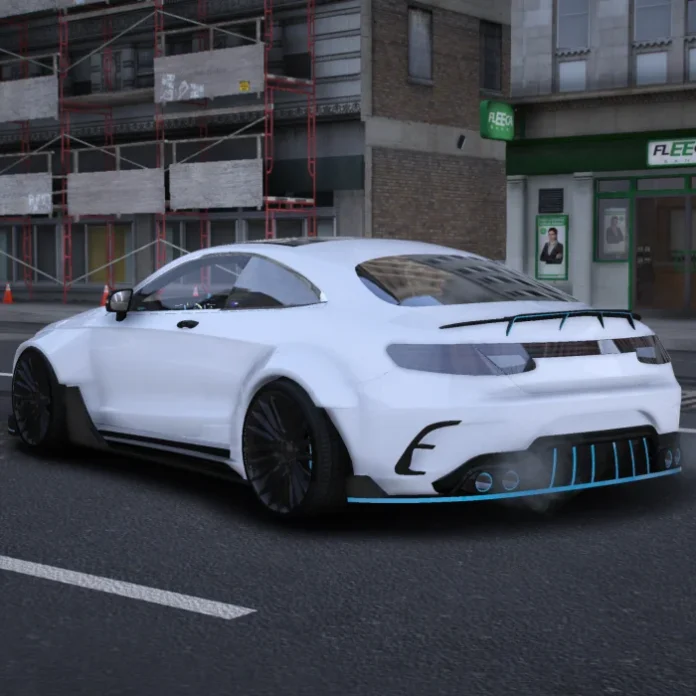
This is the practical argument for sourcing content from places that take optimisation seriously rather than collecting whatever is free. A well-built fivem debadged cars collection is designed with sensible file sizes and predictable handling, so the traffic looks varied without dragging frame rates down during a busy night. Debadged and unbranded styling has a second benefit too: it keeps the server clear of the trademark grey area that has caused real problems for communities that ignored it.
Mistake three: an open world with nowhere to go
New owners tend to focus almost entirely on vehicles and scripts, then wonder why nothing is happening in their city. The usual reason is that there is nowhere for anything to happen. Players drive around a world of locked doors and end up congregating in a parking lot because it is the only neutral space available.
Custom interiors solve this, and they do more for roleplay than almost any system. A mechanic shop with working bays gives the mechanic profession a reason to exist. A nightclub gives the social side of the server a home. A police station, a courthouse, a hospital and a warehouse give three different storylines somewhere to land.
A good fivem custom map or interior turns dead map space into a destination, and destinations are what generate scenes. Servers that invest here tend to see the kind of organic, player-driven stories that no script can manufacture.
Mistake four: installing everything at once
There is a strong temptation to launch with a complete world. It almost always backfires. When thirty things go live simultaneously and the server starts crashing, there is no way to tell which one is responsible. Owners end up tearing out working content while hunting for a problem somewhere else entirely.
The alternative is unglamorous and far more effective. Test every addition on a separate development build first. Add things in small batches. Keep a written record of what went in and when. When something breaks, the list of suspects is short.
This same discipline protects the budget. Spreading purchases across months instead of blowing everything in week one leaves room for the costs that always arrive later: hosting upgrades, moderation tools, replacing assets that did not work out.
Mistake five: thinking content substitutes for rules
This is the one that kills the most promising servers. A beautifully built city with weak moderation becomes a deathmatch arena with good scenery. Players will not invest in a month-long storyline if someone can ruin it on a whim with no consequences.
Clear expectations about character behaviour, conflict, downtime and what happens after a character dies are what make long-form roleplay possible. The content sets the stage. The rules decide whether anyone is willing to perform on it. Owners who spend all their energy on assets and none on moderation usually end up with an empty, very attractive city.
Mistake six: ignoring what players actually use
The most useful feedback rarely arrives as a formal request. It shows up as an offhand comment that a district feels empty, or that a particular job takes too long to be worth doing, or that nobody goes to the north side of the map anymore.
A short monthly review of what players actually used, and what they ignored, is usually enough to keep the world moving in the right direction. It also prevents the expensive habit of adding features nobody asked for while the thing people complain about every week stays broken.
What the surviving servers have in common
They are not the ones with the most content. They are the ones where the pieces fit together, the technical foundation holds under load, the rules are enforced consistently and the owner is still paying attention six months in.
None of that is glamorous, and none of it shows up in a trailer. It shows up in player retention, which is the only metric that really matters.
For owners working this way, specialist stores like fivem mods make the sourcing side considerably less painful, offering vehicles, interiors and clothing built to work together rather than content gathered at random. The rest is patience, and a willingness to say no to things that do not belong in the city you are building.