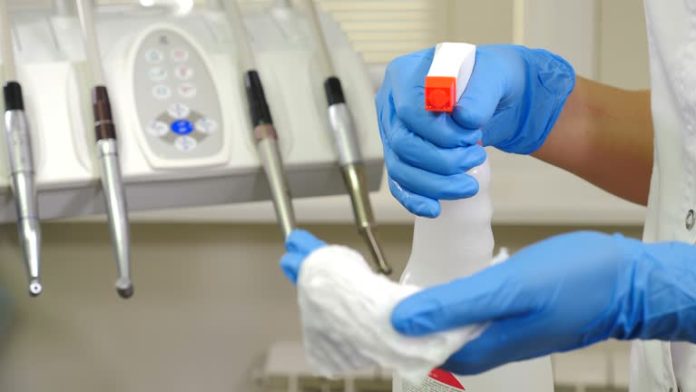
Patients walk into a medical office and make a judgment before a single word is spoken. They look at the waiting room. They check whether the chairs are clean, whether the surfaces look maintained, whether the restroom is in good shape. It’s instinctive — people assess healthcare environments more critically than almost any other space because the stakes feel personal. When it looks clean and well-kept, trust goes up. When it doesn’t, it goes down, and it’s very hard to recover.
But appearances, as any infection control professional will tell you, are not the whole story. A medical office can look clean and still be harboring pathogens on surfaces that weren’t disinfected with the right products, at the right concentration, for the right amount of time. That’s why professional medical office cleaning services are built around clinical protocols — not just appearance standards.
The Gap Between Clean and Sanitized
This distinction matters enormously in a healthcare setting. Cleaning removes visible dirt and debris. Sanitizing reduces microbial counts on a surface. Disinfecting kills or inactivates a specific spectrum of pathogens. These are three different things, and they require different products, different processes, and different dwell times.
A surface that looks spotless can still carry a significant pathogen load if it was wiped with an ineffective product, or if the product wasn’t left on the surface long enough to work. This is one of the most common failures in healthcare facility cleaning — people wipe and immediately dry, not realizing that most disinfectants need anywhere from thirty seconds to four minutes of wet contact time to actually work.
Professional medical office cleaning services train their staff on this distinction. They select products appropriate to the surfaces and risk levels in each zone of your facility. They build dwell time into their process rather than rushing through it. And they document what was cleaned, with what product, and when — creating a record that supports infection control accountability.
Examination Rooms Demand the Most Attention
Every examination room in a medical office turns over multiple times a day. Each turnover is an opportunity for cross-contamination between patients if cleaning isn’t handled correctly. Exam tables, blood pressure cuffs, otoscopes, light handles, countertops, computer keyboards, doorknobs — every surface a provider or patient touches needs to be addressed between visits.
End-of-day terminal cleaning goes deeper. It covers everything touched during patient care that day, plus surfaces that aren’t reached during quick turnover cleaning: baseboards, door frame edges, light switches, behind equipment, the undersides of counters. This thorough daily clean is what prevents the slow accumulation of contamination that turns into a persistent infection control problem.
Waiting Rooms: The Overlooked Risk Zone
Medical office waiting rooms are, by definition, places where sick people sit together. Yet they’re often the least aggressively cleaned area of a medical facility because they look more like a regular office than a clinical space. That’s a mistake.
High-touch surfaces in waiting rooms — armrests, reception windows, check-in tablets, door handles, pens left for patients to use — are vectors for transmission between symptomatic and well patients. A well-designed medical office cleaning program addresses these surfaces multiple times throughout the day, not just at open and close.
The same logic applies to pediatric waiting areas, which often include toys and activity surfaces that children touch constantly. These need more frequent cleaning than adult-only areas, with products safe for child contact. Getting this right requires planning and product knowledge, not just good intentions.
Supporting Your Practice’s Infection Control Program
Environmental cleaning is one component of a medical office’s broader infection control program. The best outcomes happen when the cleaning company understands and supports the other components — hand hygiene, PPE protocols, waste segregation, equipment sterilization — without interfering with or duplicating them.
A cleaning company that works in healthcare settings regularly will understand how to operate within the structure of a clinical infection control program. They’ll know which areas are restricted, which waste streams require specific handling, and how to work alongside clinical staff without creating confusion or conflict.
For medical offices that are serious about patient safety and regulatory compliance, PBC Cleaning delivers medical office cleaning services built on genuine clinical knowledge and a commitment to results your patients can actually feel.