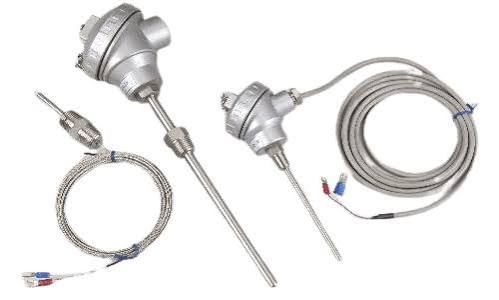
Plastic behaves differently depending on how much heat it receives during processing. Too much heat can damage the material, while insufficient heating can cause incomplete melting, poor flow, and defects in finished products. Thermocouples and RTDs help manufacturers monitor equipment temperatures and maintain suitable processing conditions throughout production.
Why Plastic Processing Needs Consistent Temperature Control
Plastic processing equipment relies on controlled heating to soften, melt, and shape raw materials. Injection molding machines and extruders contain multiple heating zones that operate at different temperatures. Each zone must provide enough heat for the material to move through the equipment without overheating.
Temperature variations can affect melt viscosity, product dimensions, and surface appearance. Excessive heat may degrade certain polymers, while cooler conditions can increase flow resistance or cause incomplete filling. Accurate measurements allow controllers to adjust heaters and help operators maintain the processing temperatures specified for each material.
Thermocouples Monitor Heat Along the Processing Barrel
Heating barrels commonly use thermocouples to measure temperatures at different locations. These sensors generate a small electrical voltage when their measuring junction experiences a temperature difference relative to the reference connection. The controller converts that signal into a temperature reading.
Type J thermocouples frequently appear in plastics machinery because their operating range suits many barrel heating applications. Type K sensors provide another option where higher temperatures or different operating conditions apply. Properly installed probes help controllers regulate heating bands and maintain the required temperature across individual barrel zones.
How Do RTDs Help Maintain More Stable Readings?
A resistance temperature detector measures temperature through changes in electrical resistance. Platinum RTDs, particularly Pt100 sensors, provide predictable measurements that make them useful where process stability and repeatability matter.
Certain plastic processing applications benefit from this measurement consistency, especially systems requiring close temperature regulation. RTDs can monitor equipment components, cooling circuits, and selected processing areas within their rated temperature limits.
Unlike thermocouples, RTDs require an electrical measuring current rather than generating their own voltage. Suitable controllers interpret resistance changes and use the readings to regulate connected heating or cooling equipment.
Barrel Temperature and Melt Temperature Are Not Always Equal
A barrel-mounted probe usually measures the temperature of the surrounding metal rather than the molten plastic directly. Friction from the rotating screw and mechanical mixing can generate additional heat inside the material.
Consequently, the actual melt temperature may differ from the temperature displayed by the barrel controller. Operators sometimes verify melt temperatures using appropriate measurement methods at the nozzle or during processing checks. Understanding this difference helps manufacturers avoid assuming that a stable barrel reading guarantees uniform melt conditions.
Sensor Placement Affects How Quickly Problems Are Detected
Temperature probes must reach the intended measuring location to provide useful readings. Poor contact between a probe and its mounting surface can delay its response or produce measurements influenced by surrounding air.
Spring-loaded bayonet probes are common in certain plastics processing equipment because they help maintain contact with the heated barrel. Threaded probes offer another mounting option where machinery provides suitable openings.
Installation depth also matters. A sensor positioned too far from the heated surface may respond slowly to changing conditions, causing the controller to adjust heating based on delayed information.
What Happens When a Temperature Sensor Starts Failing?
Damaged sensors do not always stop producing readings immediately. Loose connections, deteriorating insulation, and damaged sensing elements can cause intermittent signals or inaccurate measurements.
An unreliable barrel probe may lead a controller to supply excessive heat or reduce heating unnecessarily. These errors can affect processing consistency and contribute to material degradation, short shots, or dimensional problems.
Maintenance technicians should investigate unusual temperature fluctuations, compare readings with suitable reference instruments, and inspect cables and probe connections. Early detection helps prevent production losses caused by incorrect temperature feedback.
Different Processes Call for Different Sensor Characteristics
Injection molding and extrusion equipment share certain heating requirements, but their operating conditions differ. Injection molding involves repeated production cycles, while extrusion often depends on maintaining stable processing conditions during continuous material flow.
Comparing thermocouples and RTD options allows manufacturers to consider response speed, measurement stability, operating temperature, and mechanical durability. Thermocouples offer rugged configurations widely used around heating barrels, while RTDs can provide accurate, repeatable readings in suitable applications.
Sensor construction also affects service life. Protective sheaths, compatible fittings, and appropriate wiring help temperature probes withstand vibration, repeated heating cycles, and routine machinery operation.
Matching Temperature Sensors With Existing Heating Equipment
Replacement sensors must fit the machinery and communicate correctly with its temperature controller. Probe length, diameter, mounting style, and electrical connection should match the equipment specifications.
Different thermocouple types require compatible controller settings and extension wiring. RTD installations may use two-wire, three-wire, or four-wire connections depending on measurement requirements. Incorrect configurations can produce misleading temperatures even when the sensing element remains functional.
Keeping plastic processing equipment at the right temperature starts with sensors that fit the machinery and respond accurately to changing conditions. Thermal Corp offers thermocouples, RTD probes, and other temperature sensing components designed for industrial heating applications. With different probe sizes, mounting fittings, and connection options available, the company helps manufacturers find suitable replacements for worn barrel sensors or components for new processing equipment. These options allow facilities to match temperature probes to their heating systems, installation requirements, and day-to-day production needs.